
I tried retatrutide: and it wasn't just the weight loss that that surprised me
I've always known what to do with food. I'm a nutritionist, it's literally my job. My lab markers are excellent. I eat well most of the time. But food has always been on my mind in a way that goes beyond hunger. When I'm avoiding a task, my brain goes straight to eating. Not out of genuine hunger. A dopamine hit. A way out.
So when I started researching retatrutide, weight loss wasn't what caught my attention. It was what people were saying about food noise. And after months of research, I decided to find out for myself.
What is retatrutide?
Retatrutide is a triple agonist peptide, meaning it targets three receptors: GLP-1, GIP, and glucagon. This makes it distinct from semaglutide (Ozempic/Wegovy) and tirzepatide (Mounjaro/Zepbound), which target fewer receptors. Early trial data has shown over 20% body weight reduction, higher than any currently approved GLP-1 medication.
It is currently research use only and not available for clinical prescription. Everything I'm sharing reflects my personal experience and the published research, not a recommendation.
I'm also on a very low dose, well below clinical trial levels. That context matters for everything that follows.
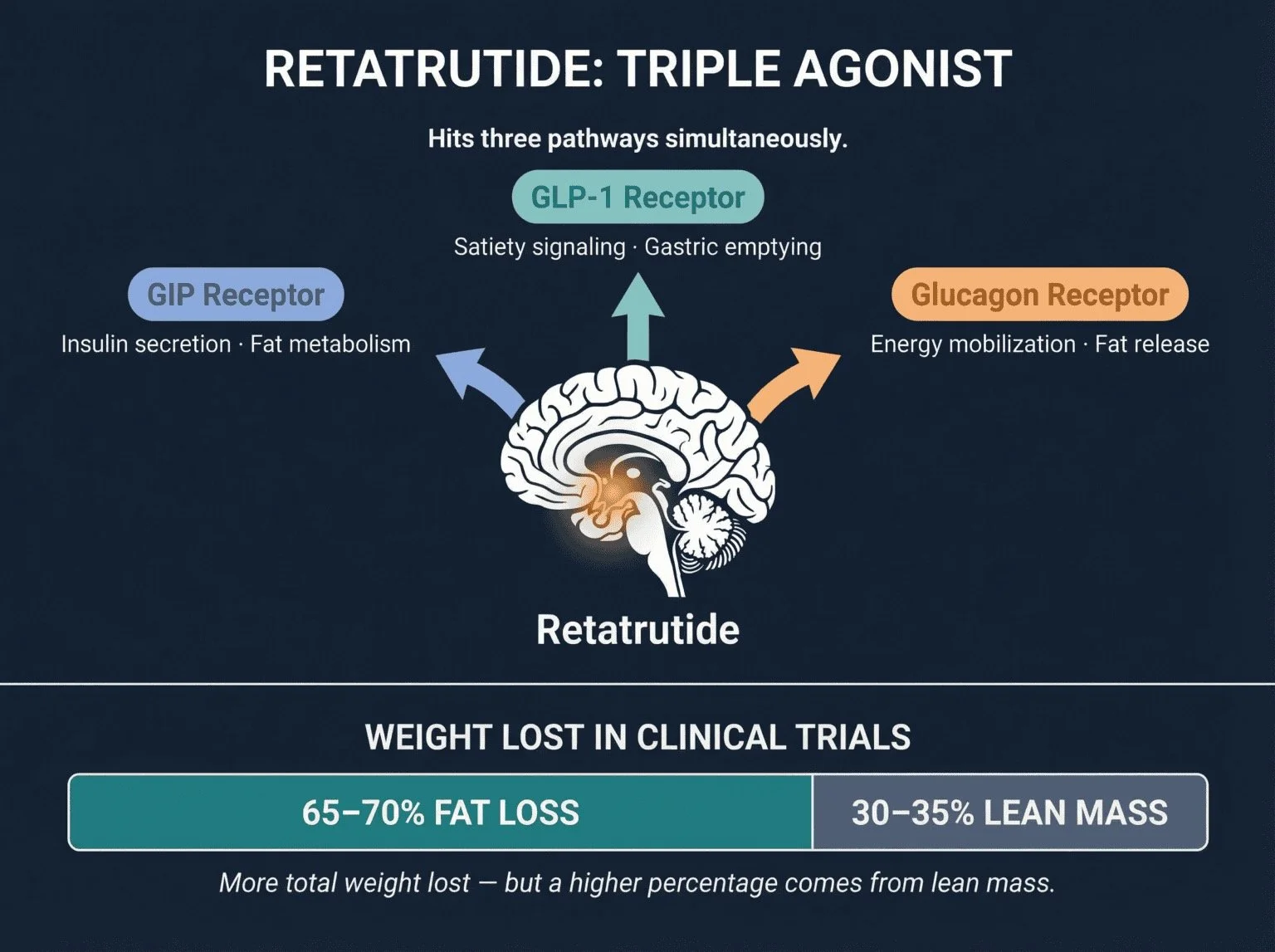
Why I changed my mind on GLP-1s
For a long time, I thought GLP-1 medications were a shortcut that bypassed the actual work. Lose weight on the drug, stop taking it, gain it back. I've always believed that lasting results require behaviour change… and I wasn't convinced these peptides delivered that.
What shifted my thinking was looking more carefully at the mechanism. Specifically, the effect on the brain's reward pathways, not just appetite suppression, but how the brain responds to food at a neurological level. If a peptide can genuinely change that relationship, that's not bypassing behaviour change. That's facilitating it.
Food noise dropped significantly
This was the result I was most interested in… and it delivered. The urge to procrastinate-eat would surface and then just leave, without the usual pull. I still get hungry. I still enjoy food. But I'm eating because I'm genuinely hungry, not to avoid something. For the first time, I can eat two bites of something sweet and stop, not because I'm white-knuckling it, but because I actually want to.
My consistency across the board improved
This one surprised me. Whatever is happening with these reward pathways, the effect isn't limited to food. I haven't missed a workout in months. My strength training is the most consistent it's ever been. The mental friction between knowing what I should do and actually doing it has reduced noticeably. I wasn't expecting this, and I don't want to overstate it — but it's been significant enough to mention.
Side effects: honest breakdown
What I didn't experience: No nausea, no digestive issues, no emotional blunting. These are the most commonly reported side effects on GLP-1 medications, and I had none of them. My low dose is likely a factor, as is the quality of my diet. I do think there's a connection between eating a heavily processed diet on GLP-1s and experiencing more digestive distress, though that's a hypothesis rather than a clinical claim.
What I did experience:
Increased resting heart rate and lower HRV: two markers of cardiovascular and nervous system health that moved in the wrong direction. My baseline is healthy, but I'm monitoring this closely.
Waking at 3am during the first two weeks: frustrating but explainable. Retatrutide activates glucagon receptors, which shifts metabolism toward fat burning and elevates ketone production. My ketones were higher than they've ever been, even on higher carb days. Once I increased my afternoon carbohydrate intake, the sleep disruption resolved. If you're on a GLP-1 and struggling with sleep, this is worth looking into.
A note on the "earn it" mentality
There's a persistent idea in health and fitness that anything making the process easier is somehow cheating. I don't buy it.
If a tool, whether that's a structured meal plan, a training program, or a peptide, helps you build the habits and behaviours that lead to long-term health, that's the whole point. Easier is not the same as cheating.
For people who already know what to eat, who aren't making uninformed choices, but for whom food is still a constant mental battle, you're not weak, and you're not lacking discipline. Some of us are simply wired differently around reward and food. A tool that can shift that, without taking away the enjoyment of eating, is worth talking about honestly.
What's coming next
I'll be running the same full blood panel I did a few months ago to track any changes from retatrutide, and I'll share all of it. I also have a video coming on how to preserve muscle on a weight loss peptide, if you're on semaglutide, tirzepatide, or retatrutide, that one matters. Subscribe so you don't miss it.
